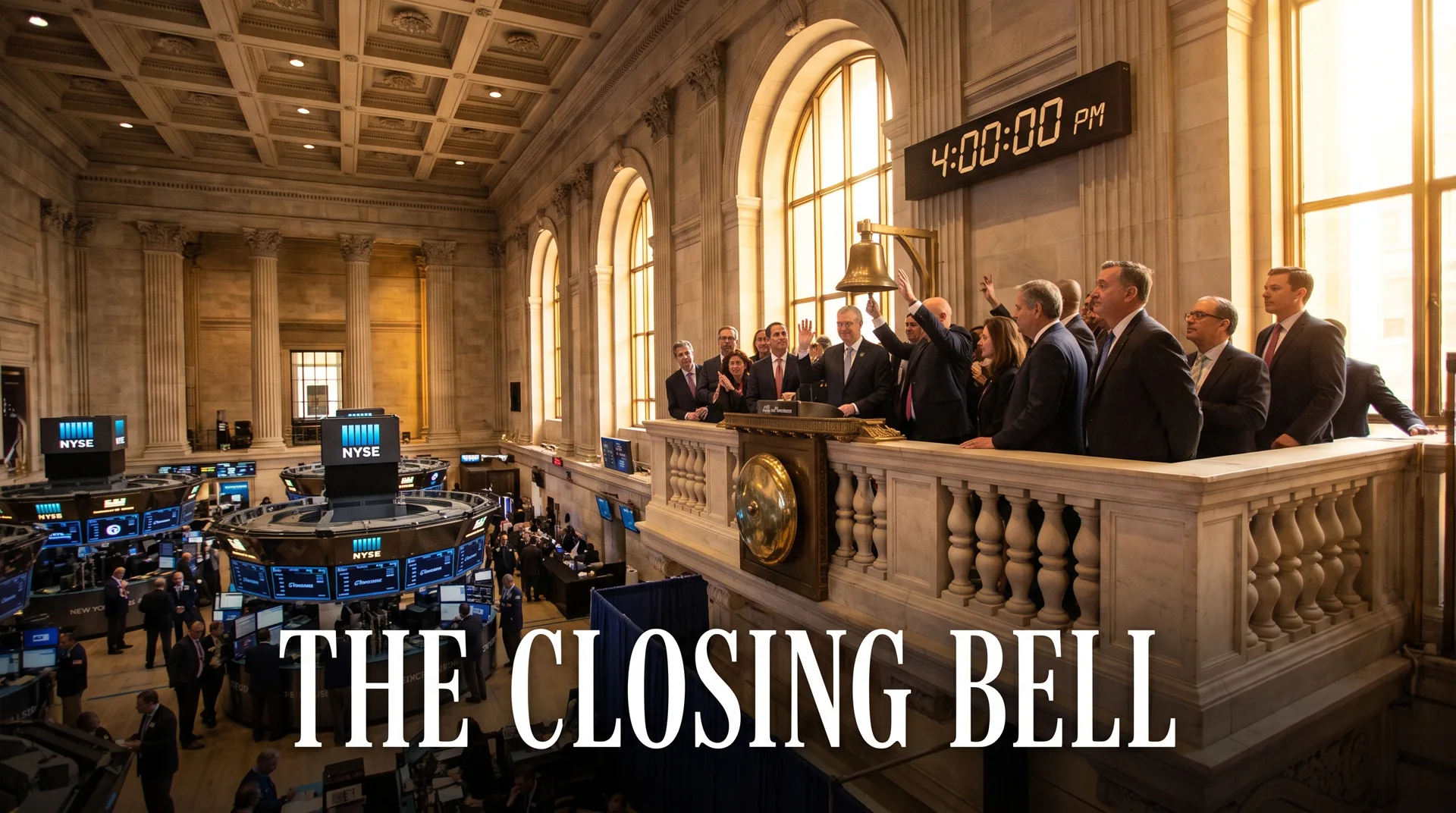
The Closing Bell
Treasury yields at 19-year highs did what strong economic data couldn't stop: they dragged the S&P 500 (SPY) down 0.7% and the Nasdaq lower even as investors tried to separate AI winners from rate-sensitive losers.
The bond market ran the show.
The 10-year yield's push to a 19-year high overshadowed a solid batch of S&P Global PMI prints (Manufacturing 57, Services 58.7, Composite 58.4) that would normally read as good news. Instead, strength in the data reinforced expectations that policy stays tighter for longer, and rate-sensitive corners of the market paid the price. Retailers, real estate names, travel and leisure stocks, building materials, and foreign banks all traded lower on the same thesis: higher borrowing costs, softer demand, thinner margins. The Russell 2000 (IWM) dropped 1.8%, worse than the headline indices, as small caps absorbed the brunt of the repricing. Crypto took a beating too, with Bitcoin slipping below $85,000 and dragging Ethereum, XRP, and Dogecoin down with it as a looming $18 billion options expiry added pressure. Oil bucked the trend, with USO up 3.3% on Cushing inventory data and a since-denied report of a potential diesel export ban, a headline the White House dismissed as "fake news."
Mega-cap tech split along AI lines.
Meta Platforms (META) rose 1% as analysts, including Dan Ives, called the new Muse AI product "a game changer" investors had discounted. Microsoft (MSFT) edged higher on an upgrade citing steady margins even without heavy AI model spending. But Alphabet (GOOGL, GOOG) fell sharply, off 3.8% and 3.5% respectively, as interactive media names got caught in the same rate-driven trade that hit ad-dependent platforms broadly, Snap included. Apple (AAPL) slipped despite BofA reiterating its Buy rating with a $370 target. Cybersecurity emerged as the day's clear haven trade: CrowdStrike (CRWD) hit a 52-week high and closed up nearly 5%, Palo Alto Networks surged 3%, and the group broadly outperformed as investors rotated into the space as both an AI-adjacent bet and a shelter from tech volatility. Memory stocks stayed contentious, with Martin Shkreli disclosed as short Micron even as analysts held a buy consensus into earnings.
McDonald's had the worst day on the tape.
Shares fell 4.8% to four-year lows after CEO Chris Kempczinski delivered a grim inflation outlook, admitted the company is "falling short" on execution, and unveiled a 2030 strategy alongside an $8.5 billion franchisee commitment through 2036. General Mills (GIS) warned inflation could hit 6% with price hikes still on the table. Paychex (PAYX) beat Q1 estimates but sank after flagging a segment running "slightly below" expectations. Cintas (CTAS) topped views, crediting volume over price hikes. Ambarella (AMBA) drew takeover chatter on reports of a possible $95-105 per share acquisition offer.
After the bell and tomorrow:
Stitch Fix, H.B. Fuller, and NeoVolta report after the close. Watch whether yields extend their climb tomorrow, and whether cybersecurity's relative strength holds as a tell on risk appetite.
Bottom line: rates, not earnings, ran the tape today, and until yields stop climbing, every rally in AI-linked names will keep fighting a market-wide repricing of risk.